
What to order at a Thai restaurant for your first meal

Your first Thai meal doesn’t need to be a test of how much chilli you can handle. If you’re deciding what to order at a Thai restaurant for the first time, Pad Thai is a sweet-leaning noodle dish to start with, while green curry offers a fragrant, coconut-based option. At Baan Torung in Perth, you can ask staff for a recommendation and explain whether you prefer mild or medium spice.
It’s natural to feel unsure when the menu is new, especially when you’re choosing between sharing a few dishes and ordering your own meal. A little guidance makes it easier to settle in and enjoy the flavours at your pace. This guide explains what to ask, how to choose portions, how to communicate your spice preference, and what to expect from Pad Thai and green curry.
Table of Contents
1. Choosing dishes with help from restaurant staff
Give staff a useful starting point: mention flavours you enjoy, ingredients you avoid, and how much chilli suits you. Then ask for a suggested curry, soup, stir-fry and side that fit your preferences. For example, say, “I’d like something mild, a soup or curry, and a vegetable side. What would you recommend?” This gives staff details to work with, rather than asking them to choose from the whole menu.
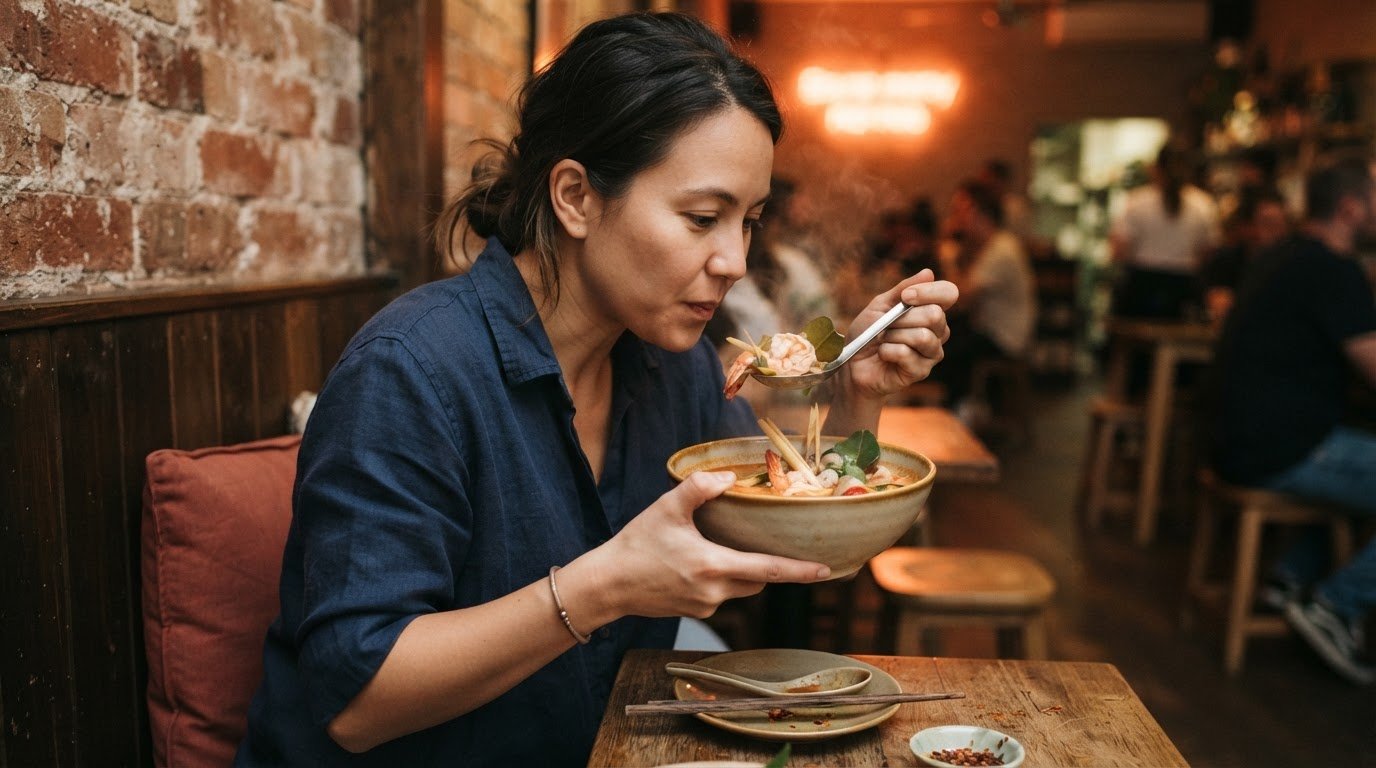
For a first curry, consider the flavour and texture you prefer. Green curry is coconut-based and fragrant, while Massaman Beef Curry offers a richer curry option. If you’d prefer something lighter, ask about a soup such as Tom Yum Goong. A soup is brothy, while a curry is saucier and pairs well with rice. Staff can explain the dishes and help you choose.
Think about how the dishes will sit together. A soup or curry can be balanced with a dry stir-fry and a vegetable side, rather than choosing several saucy dishes. Papaya salad adds shredded unripe papaya, tomatoes, peanuts, lime and fish sauce. Ask about its chilli before ordering, as the heat can surprise first-time diners. Stir-fried broccoli is another way to add vegetables without choosing a salad.
Spice labels can differ between Australian restaurants, so ask what “mild” or “medium” means on that menu. On one scale, mild is level 0, with no chilli, while medium is level 1, with gentle warmth that builds slowly. Tell the server your preferred level when ordering, and ask them to recommend a suitable dish. If you’re unsure, start mild or medium and explore more heat another time.
2. Sharing dishes and individual portions
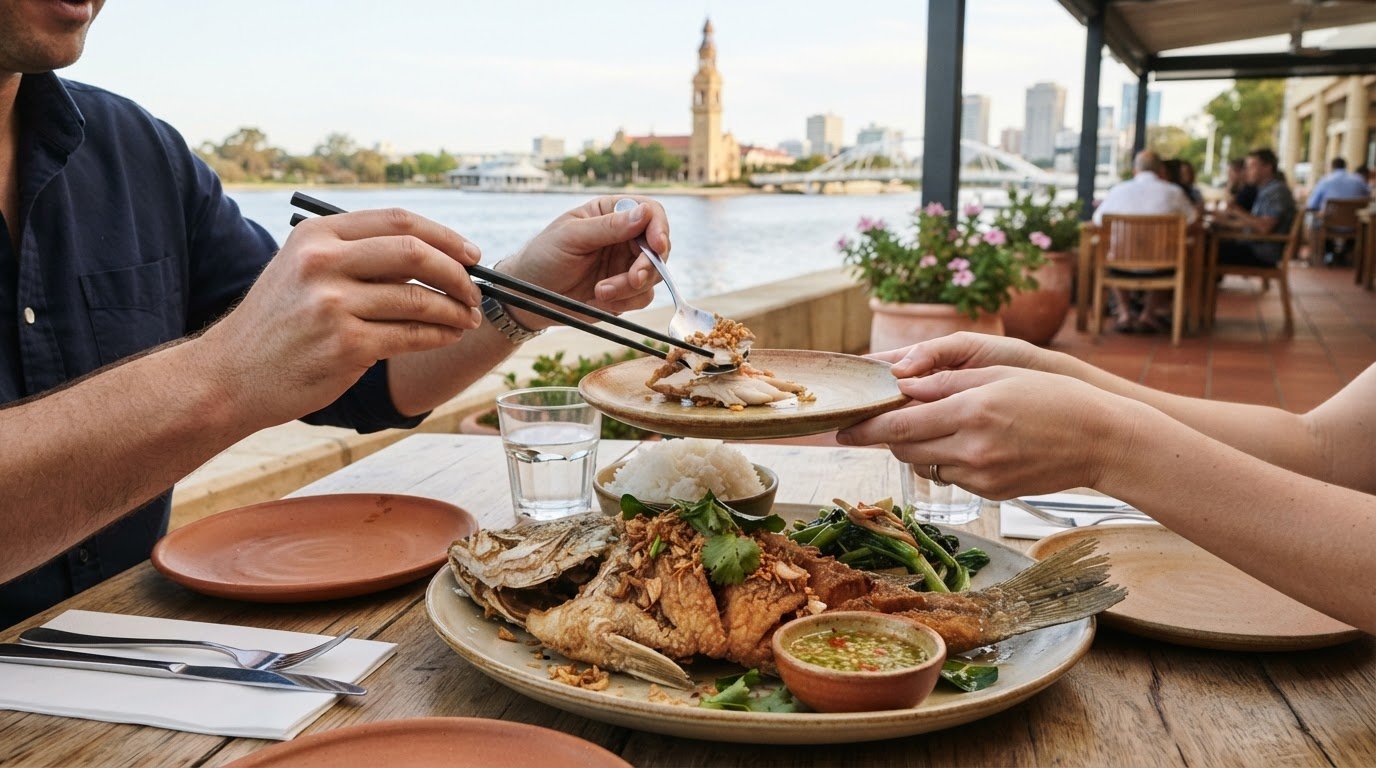
Thai food is often served family-style, with plates arriving as they’re ready rather than in courses. For a simple shared meal, two diners can start with three plates; another guide is one dish per person, plus one extra to share. For four people, that means five plates. Curries, soups and seafood suit sharing, while Pad Thai, Pad See Ew and fried rice work well as individual meals.
Build balance across the table: pair a wet dish, such as soup or curry, with a dry stir-fry and a yum salad. A yum dish brings a bright, tangy contrast to rich or savoury plates. With three or more guests, add a grilled protein or seafood plate if you’d like another texture to pass around. Larb can be very hot, and som tam’s chilli can catch first-time diners by surprise, so ask about heat before ordering either.
For a first appetiser, chicken satay offers grilled chicken with a peanut-based sauce; ask about peanuts if allergies are a concern. Mango sticky rice is a familiar dessert of sweet sticky rice, ripe mango and coconut cream. Popular dishes may contain egg, peanuts, prawns or fish sauce, so tell staff about allergies and ask about ingredients before ordering.
For vegetarian or vegan choices, ask whether a vegetable or tofu stir-fry can be prepared without animal-based sauces. Rice noodles and rice can suit some gluten-free meals, but sauces and other ingredients matter, so explain your dietary needs clearly. These options depend on the dish’s ingredients and preparation.
For your first shared spread, choose one familiar noodle or rice plate, one saucy dish and a vegetable option. You can browse Thai meal options as you decide which flavours and portions appeal to your table.
3. How to request a preferred spice level
Say your preference plainly when you order, rather than waiting until the first bite. “Could I have this mild, please?” or “I’m comfortable with medium heat” gives staff a clear starting point. Spice labels aren’t universal across Australian restaurants, so ask what the menu’s level means if you’re unsure. A “medium” at one restaurant may not match another kitchen’s seasoning.
On one restaurant scale, mild is level 0, with no chilli. Medium is level 1, bringing gentle warmth that builds slowly. Spicy is level 2, with a noticeable burn that most non-Thai diners enjoy. Thai-spicy is level 3, which the scale advises approaching with caution. These labels are useful examples, not a standard shared by every restaurant.
If you’re new to chilli, request mild or medium and adjust your choice on later visits. Try saying, “Please make it mild, with no chilli,” or, “Could you make it medium, not Thai-spicy?” Naming a level is clearer than asking for “not too hot”. If you’re sharing, tell staff whose dish needs less heat so your preference is understood.
Ask about the dish as well as its level. A coconut-based curry can still be spicy, and a mild-sounding description doesn’t tell you how much chilli the kitchen uses. For papaya salad, ask whether the chilli can be reduced; its heat can surprise diners. If you enjoy flavour but want less burn, ask staff to suggest a milder preparation rather than assuming a particular dish has no chilli.
Choose a level that lets you enjoy the whole meal, not just the first mouthful. Medium may suit diners who want gentle warmth; level 0 is a straightforward request when you prefer no chilli. Tell staff your choice as you order, then use their explanation of the restaurant’s scale to decide whether to explore more heat next time.
4. Ordering Pad Thai and green curry
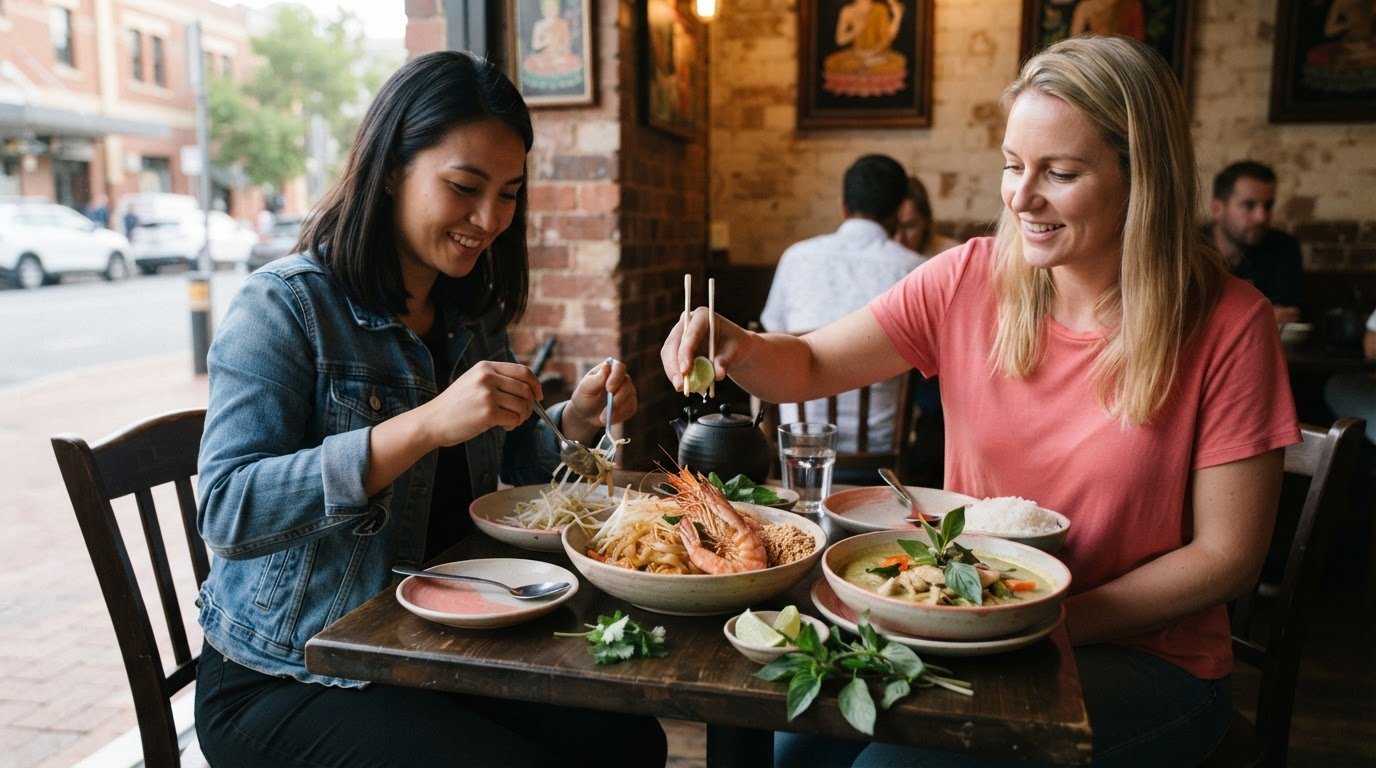
Pad Thai and green curry make a useful first comparison because they offer different textures and flavours. Pad Thai is a wok-charred rice noodle dish with tamarind, palm sugar and peanuts, often described as mild and sweet. Green curry is made with coconut milk, bringing a saucier, creamy contrast. Choose noodles for a self-contained plate, or curry when you’d like a dish to pair with rice.
A typical Pad Thai combines rice noodles, egg, tofu or shrimp, bean sprouts, peanuts and tamarind sauce. The ingredients give you several textures: soft noodles, crisp sprouts and crunchy peanuts. If you enjoy a sweet-sour balance, tamarind and palm sugar make this a welcoming introduction. Tell staff if you avoid peanuts, egg or seafood, then ask which ingredients are in their version.
Green curry brings a different experience. Coconut milk gives the sauce its creamy base, while herbs and chilli create a fragrant, warming flavour. If you’re deciding between the two, consider how you like to eat: Pad Thai is a noodle dish, while green curry is best enjoyed with rice to catch the sauce. Ask staff how spicy their green curry is before ordering.
For a solo meal, pick the dish that sounds most appealing. If you’re sharing, Pad Thai and green curry let you try two distinct styles. Taste the noodle dish first, then try the curry for a saucier contrast. You’ll get a clearer sense of which flavours you’d like to explore next.
These two dishes are a simple starting point, not the whole story of Thai cooking. If noodles sound right, explore Thai menu options and choose the flavours that suit your first meal.
Baan Torung Thai Restaurant
Baan Torung in Perth can help make your first Thai meal easier to choose, whether you’re dining solo or sharing. For a noodle dish, try Torung Pad Thai with Shark Bay Prawns; for a coconut-rich curry, consider Torung Home Cooked Green Curry. Tom Yum Goong offers a soup option, while Red Duck Curry gives you another curry to explore.
Use what you’ve learned to guide your order: tell staff your preferred spice level and ask which dishes suit your tastes. That simple conversation can help you choose a comfortable meal while introducing you to new Thai flavours.
Contact Baan Torung Thai Restaurant to discuss your meal.
Make your first Thai meal your own
Choosing what to order at a Thai restaurant for the first time can be the start of a wider appreciation. Let your own tastes lead: notice which flavours you enjoy, then use that experience to choose something new on your next visit. There’s no need to master the whole menu at once. A familiar dish can be your starting point, while a new soup or curry gives you another flavour to explore.
Baan Torung in Perth serves Torung Pad Thai with Shark Bay Prawns, Tom Yum Goong and Torung Home Cooked Green Curry. Each gives you a different way to discover Thai cooking, whether you’re drawn to noodles, soup or curry. Share what you enjoy with the staff and let that conversation help shape a meal that feels right for you.
Ready to choose your first Thai meal? Contact Baan Torung Thai Restaurant, and take that next delicious step with confidence.
Frequently Asked Questions
What are the most popular Thai dishes for first-time diners?
Pad Thai, green curry and Tom Yum Goong are familiar starting points, each offering a different style of meal. Choose Pad Thai if you’d like noodles, green curry for a saucier dish, or Tom Yum Goong if soup appeals. If you’re choosing what to order at a Thai restaurant for the first time, think about the textures and flavours you usually enjoy, then use those preferences to guide your pick.
What are the best mild Thai dishes for beginners?
Pad Thai and Massaman curry are good mild options to ask about. Pad Thai has a sweet-leaning tamarind flavour, while Massaman is rich and slow-cooked. If you’d rather start with a lighter dish, ask staff whether a soup or stir-fry can be made mild. Mention your preferred heat when ordering, and ask about any ingredients you avoid so the suggestion suits you.
How spicy are common Thai dishes, and how can you request less chilli?
Chilli heat varies by dish and restaurant, so a label such as “medium” can mean different things. Ask staff to describe the restaurant’s scale, then state your preference clearly: “Please make it mild, with no chilli.” For a dish you haven’t tried, ask how spicy it is. This helps you make an informed choice before ordering.
How do you order a balanced Thai meal to share?
Choose dishes with contrasting textures and flavours rather than ordering several plates that feel alike. For example, combine a soup or curry with noodles or a stir-fry, then add a salad for a sharper contrast. Let everyone at the table mention their preferences before ordering, especially if someone wants a mild dish or avoids particular ingredients. Staff can help you find a combination that works for the group.
What dining etiquette or ordering customs should first-time diners know at a Thai restaurant?
Thai dishes can be enjoyed together as shared plates or ordered as individual meals. If you’re eating with others, agree on what to share before ordering and let the table know which dishes you’d like to try. Tell staff about allergies or dietary needs when you order, not after the food arrives. It’s also fine to ask for a recommendation if a menu description is unfamiliar.
Comments