
Thai Food Beyond Pad Thai: Salads, Curry and Sour Soup

A rewarding Thai meal can begin when you look beyond Pad Thai. Thai food that's not Pad Thai ranges from bright, herb-filled salads to comforting curries and sour fish soup, with each dish offering its own balance of heat, tang and richness.
Pad Thai is a familiar favourite, and there’s nothing wrong with ordering it. But if you’re curious about the flavours that sit alongside it, there’s a generous range of dishes to discover, from crisp, lively salads to deep, gently spiced curry.
This guide introduces Thai salads such as larb and papaya salad, explores dishes beyond Pad Thai, and explains what makes gaeng tai pla, or sour fish soup, distinctive. You’ll also learn about Massaman curry, with its toasted spices, tamarind and gentle sweetness. Use these flavours to find a new favourite to share at the table.
Table of Contents
1. Thai salads
Thai salads bring freshness, heat and savoury depth together in one bowl. Larb, green papaya salad, nam khao tod and nam tok each offer distinct textures and flavours. They’re a lively way to explore Thai food beyond Pad Thai, balancing tangy dressing, herbs and crunch.
Thai street-food snacks and appetisers include green papaya salad, larb and nam tok, often served with vegetables or rice. These dishes can work as shared starters or substantial meals, depending on their accompaniments.
Green papaya salad, also called som tam, combines shredded unripe papaya with a punchy dressing. Lime, fish sauce, palm sugar and chillies create a familiar balance of flavours, while crunchy vegetables add freshness. In Thailand, street vendors often adjust the spice level to suit individual tastes. Roast chicken and grilled pork are traditional partners, and sticky rice makes the meal more filling. Some versions include shrimp for a savoury seafood note.
Nam khao tod is a crispy rice salad with a mix of soft and crunchy textures. Crisp rice gives each bite substance, while herbs and lively dressing keep the dish bright. Its character comes from the balance of crisp rice, fresh ingredients and seasoning, making it distinct from salads built mainly around raw vegetables.
Nam tok is a meat salad, often made with pork, and is sometimes called waterfall pork. The name refers to juices collecting beneath the meat on the plate. Toasted rice powder, called khao khua, is a common garnish that adds a crisp, nutty texture. Lime, herbs and chillies give the dish a fresh, savoury edge.
For a first taste, share papaya salad with grilled pork, then try nam tok to compare its toasted rice and meat. A Thai salad recipe can also introduce you to Thai cooking: notice how sour lime, salty fish sauce, palm sugar and heat work together. Rice noodles aren’t central to these salads, though noodles can accompany other dishes in a meal.
2. Thai dishes beyond Pad Thai
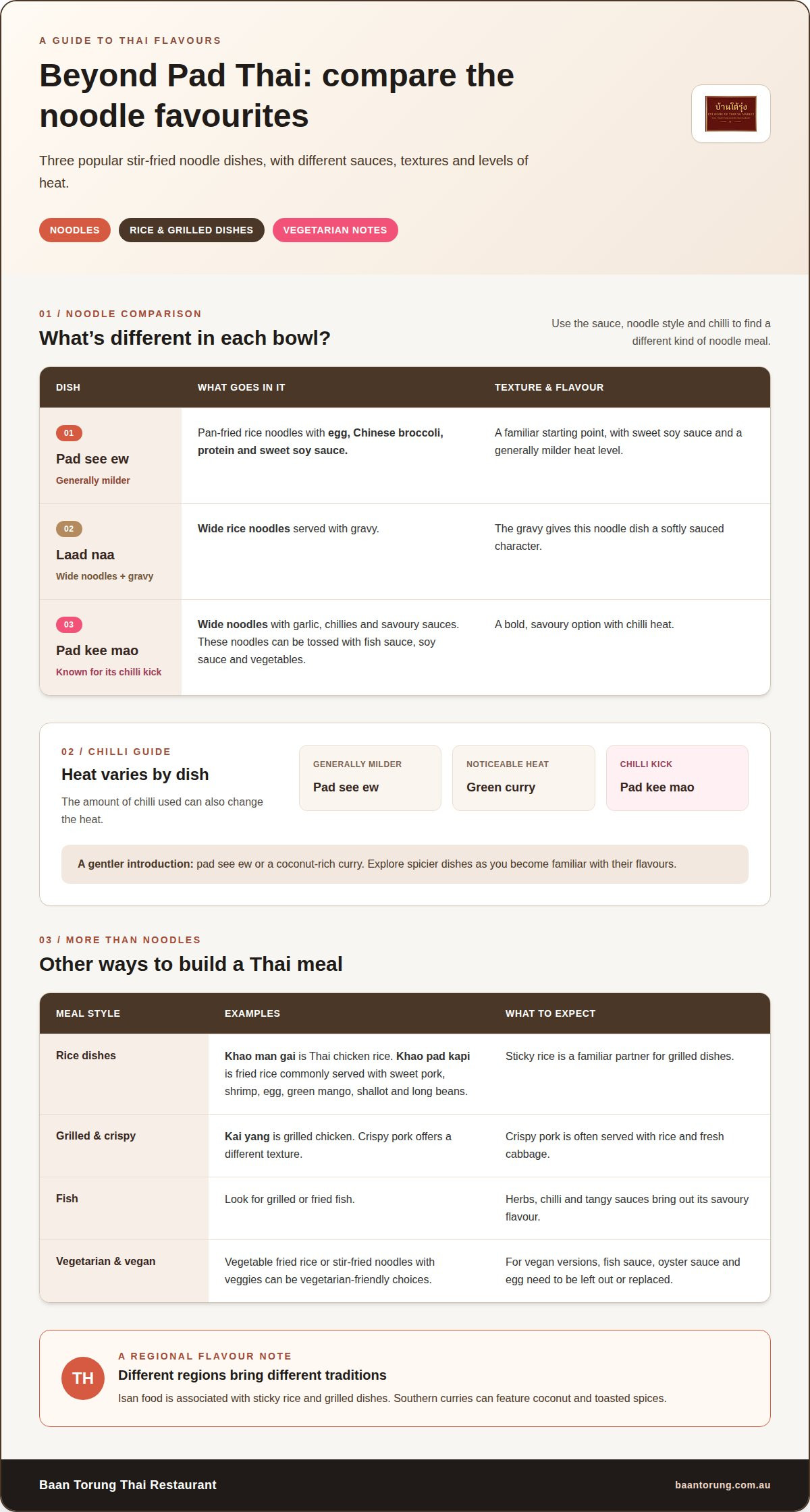
Thai menus offer plenty beyond noodles, from grilled fish to fragrant rice and slow-simmered curries. For anyone exploring Thai food that's not Pad Thai, pad see ew is a familiar starting point: pan-fried rice noodles with egg, Chinese broccoli, protein and sweet soy sauce. Laad naa pairs wide rice noodles with gravy, while pad kee mao combines wide noodles with garlic, chillies and savoury sauces.
Popular stir-fried noodle dishes include pad see ew, laad naa and pad kee mao. Their textures range from softly sauced noodles to wide noodles tossed with chillies, fish sauce, soy sauce and vegetables. These preparations show how Thai food that's not Pad Thai can still put noodles at the centre of a meal.
Heat varies by dish and by the amount of chilli used. Pad see ew is generally milder, while pad kee mao is known for its chilli kick; green curry can also bring noticeable heat. If you’re new to Thai food, try pad see ew or a coconut-rich curry first, then explore spicier dishes as you become familiar with their flavours.
For rice dishes, khao man gai is Thai chicken rice, while khao pad kapi is fried rice commonly served with sweet pork, shrimp, egg, green mango, shallot and long beans. Sticky rice is a familiar partner for grilled dishes. Kai yang, or grilled chicken, is one example; crispy pork offers a different texture and is often served with rice and fresh cabbage.
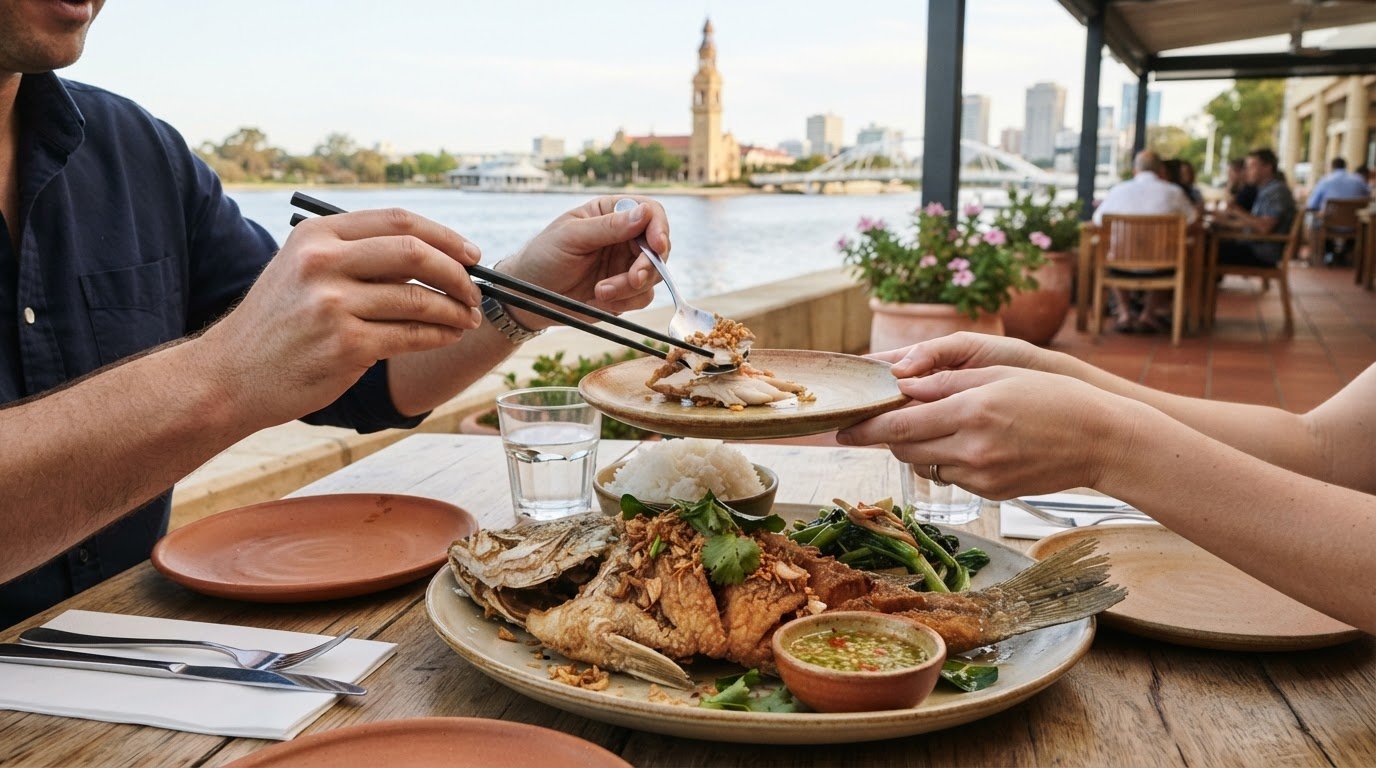
Fish lovers can look for grilled or fried fish, with herbs, chilli and tangy sauces bringing out its savoury flavour. Slow-simmered curries develop depth as their ingredients cook together. In southern Thailand, Massaman features toasted spices, while coconut-based curries offer a creamy contrast.
Regional favourites reflect different ingredients and cooking traditions. Isan food is associated with sticky rice and grilled dishes, while southern curries can feature coconut and toasted spices. Australian Thai menus commonly include stir-fried noodles, rice dishes, grilled satay and curries.
Vegetarian-friendly choices can include vegetable fried rice or stir-fried noodles with veggies. For vegan versions, fish sauce, oyster sauce and egg need to be left out or replaced, as they can appear in otherwise vegetable-focused dishes. For a meal exploring these varied flavours, browse the Thai food menu.
3. Gaeng tai pla sour fish soup
Gaeng tai pla is a bold choice for anyone curious about sour fish soup. Its name identifies its key element: fish in a broth described as sour. This makes it a different experience from creamy chicken soup or familiar noodle bowls. For diners who enjoy distinctive Thai food, it offers a memorable change of pace.
For a gentler comparison, tom kha gai is chicken soup with coconut milk. Its creamy character contrasts with the sharper flavour of gaeng tai pla. Tom Yum is another well-known Thai soup, while gaeng tai pla is a less familiar name to look for on a menu. Together, these examples show how Thai soups vary in texture and flavour.
To try gaeng tai pla, start with a small taste before deciding how much you’d like to eat. Notice the sourness first, then consider how the fish flavour develops. Plain rice can provide a simple base alongside a strongly flavoured soup. Noodles, garlic, chicken and peanuts appear in other Thai dishes, but shouldn’t be assumed to describe this fish soup.
It’s useful to distinguish soup from a dish described as street food, too. Chicken satay offers grilled, savoury bites, while gaeng tai pla is served as a bowl-centred meal. Neither needs to be the “classic” choice for every diner. Your preference may depend on whether you’re drawn to grilled food, a rich coconut broth or a sour fish flavour.
For a first tasting, try gaeng tai pla with rice and keep the rest of the meal familiar. A mild stir-fry or simple vegetable dish can provide contrast without competing with the soup. If you enjoy the sour profile, explore more Thai soups; if you prefer creamy flavours, tom kha gai is a delicious alternative. Comparing these dishes makes the range easier to understand.
4. Massaman curry
Massaman is a Southern Thai curry shaped by toasted spices, tamarind, palm sugar and fish sauce. Its warmth is layered rather than relying on chilli alone. Chopped peanuts add contrasting crunch, making each spoonful a mix of mellow sweetness, savoury depth and texture.
The cooking begins by toasting spices before combining them with garlic and shallots. This builds the curry’s aromatic base before the other ingredients join the pot. Tamarind brings a sour edge, palm sugar softens it, and fish sauce contributes saltiness. Together, these ingredients give Massaman its rounded sweet-sour-savoury character.
Massaman’s history reflects more than one culinary influence. It’s a Southern Thai curry influenced by Arabic cooking, and its toasted spices distinguish it from simpler, sharper curry profiles. Menus may call it “Massaman” or “Muslim curry”, but its defining character is a fragrant spice blend balanced with tamarind and palm sugar.
Massaman is commonly paired with rice, which gives its thick, gently spiced sauce something to cling to. Beef is a familiar choice, while peanuts add bite to the curry’s soft, slow-cooked texture. When choosing a serving, look for the contrast of aromatic spices, sourness, gentle sweetness and rich sauce.
Compared with a brighter curry, Massaman leans into warmth and layered seasoning. It suits diners looking for a fragrant curry rather than a dish defined by chilli heat. Toasted spices create its depth, tamarind and palm sugar balance the flavour, and peanuts finish each mouthful with crunch. This combination makes Massaman distinctive beyond familiar noodle dishes.
Baan Torung Thai Restaurant
Baan Torung Thai Restaurant offers diners in Perth a welcoming place to explore Thai flavours beyond Pad Thai. If you’re choosing what to try next, the menu includes Tom Yum Goong, Torung Home Cooked Green Curry and Red Duck Curry, alongside familiar favourites. For a richer curry, Massaman Beef Curry offers another way to explore the cuisine’s varied flavours.
These dishes take you from reading about Thai cooking to tasting different styles at the table. Choose a soup for a savoury bowl or a curry for warming, layered flavours. Torung Pad Thai with Shark Bay Prawns is also there when you’d like a familiar point of comparison.
Visit Baan Torung in Perth to explore Thai flavours at the table.
Make your next Thai meal an exploration
Let curiosity guide your next order. Rather than choosing only by a dish’s name, think about the flavours you feel like today: something bright, a warming curry or a familiar favourite. That small choice can open the door to Thai food that's not Pad Thai, and help you find new dishes to enjoy on future visits.
Baan Torung Thai Restaurant offers a welcoming place to explore, with Tom Yum Goong, Torung Home Cooked Green Curry and Torung Pad Thai with Shark Bay Prawns among its dishes. Choose a new flavour to try, or return to a familiar plate when that’s what you’re craving. There’s no need to know every dish before you begin; an open mind is a lovely place to start.
Contact Baan Torung Thai Restaurant and take the next step towards discovering a Thai meal you’ll look forward to sharing.
Frequently Asked Questions
What are popular Thai dishes besides Pad Thai?
Popular choices include kai jeow, a Thai-style omelette eaten with rice, protein and sriracha, and kai hor bai toey, marinated chicken wrapped in fragrant pandan leaves and deep-fried. For noodles, pad see ew and pad kee mao offer different combinations of sauce and heat. Choose kai jeow for a straightforward rice-based meal, or pandan-wrapped chicken as a fragrant shared starter.
What are the best Thai curries to try?
Try Massaman for toasted spices and a rounded, sweet-sour flavour, or explore other styles for a different curry experience. Kaeng kari is Thai yellow curry, kaeng pa is also called jungle curry, and kaeng phet is red curry. These names help identify distinct styles on a menu. If you enjoy fragrant spice, start with Massaman; choose red curry for a more chilli-forward direction.
What Thai salads are worth trying?
Larb suits anyone who enjoys savoury, herb-led flavours. It combines ground meat with lime juice, shallot, coriander, fish sauce and chillies, and is served with raw vegetables. Green papaya salad provides a crisp contrast. For a more substantial pairing, try papaya salad with roast chicken or grilled pork and sticky rice, balancing fresh, spicy and filling elements.
Comments